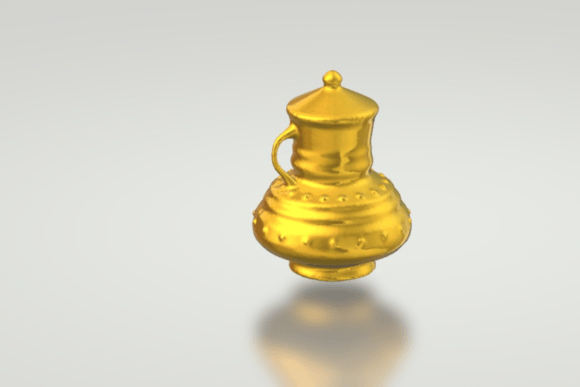
Copper Pot: From TRT Broadcast Failures to 3D Printable Decor
For a specific generation of Turkish citizens, few images evoke a stronger sense of nostalgia—and perhaps mild frustration—than the iconic Copper Pot. While copper cookware has been a staple of Anatolian craftsmanship for centuries, this particular vessel transcends its culinary origins to become a symbol of technological transition. In the early days of television broadcasting in Turkey, when signals were fragile and infrastructure was still developing, this copper pot appeared on screen whenever the national broadcaster, TRT, experienced a technical failure. Accompanied by a warning message, it served as the universal placeholder for "we are currently off-air." Today, that same object has found new life in the digital maker community, with 3D printable .stl files allowing creators to recreate this unique piece of cultural history.
The Cultural Weight of a Broadcast Placeholder
To understand the value of this specific Copper Pot model, one must first understand its context. It was not merely a test pattern; it was an emotional cue. For families gathered around a single television set in the 1970s and 1980s, the appearance of the pot signaled an abrupt end to entertainment or news. It represents an era where patience was mandatory and technology was fallible. This historical weight makes the 3D printed replica more than just a desk ornament; it is a tangible connection to a shared national memory.
When evaluating this item for your own collection or project, consider the following cultural dimensions:
- Nostalgic Resonance: For older generations, it serves as a conversation starter about the pre-digital age and the evolution of Turkish media.
- Educational Value: For younger creators and non-Turkish audiences, it acts as an artifact of broadcasting history, illustrating how different cultures managed technical limitations before digital color bars became standardized.
- Aesthetic Uniqueness: Unlike generic test patterns, the organic shape of a traditional copper pot offers a warmer, more culturally specific visual texture that stands out in modern interior design.
Transitioning from Screen to STL: The 3D Printing Experience
The availability of a dedicated .stl file for this Copper Pot bridges the gap between analog memory and digital fabrication. However, printing an object designed to mimic metal using plastic filament presents unique challenges and opportunities. Whether you are a hobbyist, a professional prop maker, or a business owner creating themed merchandise, understanding the technical considerations is essential for achieving a result that honors the original.
Material Selection and Visual Fidelity
The success of this print relies heavily on material choice. Standard PLA in a flat orange color will likely fail to capture the essence of the Copper Pot. To achieve a convincing tribute, consider these material strategies:
- Metallic Filaments: Using PLA infused with real copper powder provides the most authentic weight and sheen. These filaments can be polished after printing to reveal a genuine metallic luster that mimics the broadcast icon.
- Silk Copper PLA: For those without access to metal-filled filaments, silk variants offer a high-shine finish that captures the reflective quality seen on old CRT screens, though they lack the tactile density of metal.
- Post-Processing Paints: If structural strength is prioritized over aesthetics during printing (e.g., using PETG or ABS), applying a specialized metallic wax or acrylic paint afterward can replicate the patina of aged copper.
Print Orientation and Support Strategy
Traditional copper pots often feature curved handles and rounded bases that defy standard 3D printing geometry. When preparing the Copper Pot STL file, careful attention to orientation is required. Printing the pot upside down is generally recommended to minimize support structures inside the vessel, which can be difficult to remove. However, this may require supports for the rim or handle attachment points. Utilizing tree supports or soluble interface layers can preserve the smooth exterior surface, ensuring the final object looks like a manufactured vessel rather than a layered prototype.
Practical Applications and Use Cases
Beyond personal nostalgia, this 3D printable Copper Pot serves several functional roles in contemporary settings. Its utility extends into creative, commercial, and educational domains.
Set Design and Content Creation
Video producers, podcasters, and streamers focusing on retro aesthetics or Turkish culture can utilize this prop to establish immediate thematic context. Placing the Copper Pot in the background of a frame acts as a subtle visual shorthand. For content creators discussing media history, technology evolution, or cultural studies, having a physical representation of the TRT error screen adds a layer of authenticity that digital overlays cannot match. It transforms an abstract concept into a physical anchor for storytelling.
Themed Hospitality and Retail
Cafes, restaurants, and boutique hotels that emphasize vintage Turkish decor can integrate these prints into their interior design. While the 3D printed version should not be used for actual food preparation due to material safety and heat resistance limitations, it serves perfectly as decorative shelving, table centerpieces, or menu holders. Business owners can leverage the object’s recognizability to create an immersive atmosphere that resonates with local patrons while intriguing international visitors.
Digital Preservation and Archiving
Museums and cultural archivists are increasingly turning to 3D scanning and printing to preserve ephemeral objects. The original broadcast copper pot may be lost, damaged, or locked away in storage. By circulating and printing the .stl file, the community actively participates in preserving intangible cultural heritage. This democratizes access to historical artifacts, allowing schools and libraries to possess accurate replicas for hands-on educational exhibits without the risk associated with handling rare originals.
Evaluating Suitability for Your Project
Before downloading the STL and firing up your printer, it is important to assess whether this specific Copper Pot model aligns with your objectives. Not every retro object translates perfectly to additive manufacturing, and user expectations should be managed accordingly.
Strengths of the Digital Replica
- Accessibility: The digital file eliminates geographical barriers, allowing anyone with a printer to own a piece of Turkish broadcasting history.
- Customizability: Unlike the static image on TV, the 3D model can be scaled, modified, or remixed. Creators can add text, change dimensions, or integrate lighting elements to modernize the classic form.
- Cost-Efficiency: Sourcing vintage copperware can be expensive and unpredictable. Printing offers a consistent, low-cost alternative for decorative purposes.
Limitations and Considerations
It is vital to distinguish between a commemorative object and a functional tool. This 3D printed Copper Pot is strictly decorative. The layer lines inherent in FDM printing, combined with the thermal properties of thermoplastics, make it unsuitable for cooking. Furthermore, the emotional impact of the object is highly specific to the Turkish demographic. While makers worldwide can appreciate the geometry and history, the deep nostalgic connection will primarily resonate with those who lived through the TRT broadcasting era. When gifting or displaying this item internationally, providing context about its origin enhances appreciation and prevents it from being mistaken for generic kitchenware.
Honoring Memory Through Making
The journey of the Copper Pot from a frustrating symbol of technical failure to a celebrated 3D printable artifact illustrates the power of maker culture to reframe our relationship with the past. What was once an annoying interruption has been transformed into a cherished commemorative piece. By printing this model, we do not merely manufacture plastic; we validate a shared experience and ensure that even the glitches of history are remembered with fondness and precision.
Whether you are seeking to complete a retro display, teach a lesson on media evolution, or simply hold a piece of childhood memory in your hands, this STL file offers a direct link to a pivotal moment in time. As you prepare your build plate, remember that you are participating in a continuing tradition of adaptation. Just as TRT adapted to technical challenges with a humble household object, today’s makers adapt digital tools to preserve the textures of yesterday. The Copper Pot remains, no longer a sign of absence, but a testament to presence, creativity, and enduring cultural identity.