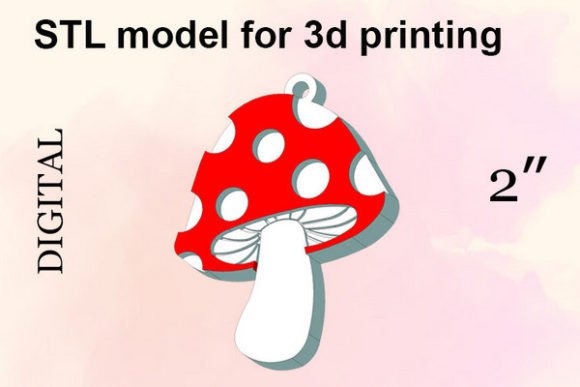
Mushroom Keychain 3D Print File: Digital Craft for Modern Personalization
The intersection of digital fabrication and personal style has created a new category of accessible design, where functional accessories are no longer limited to mass-produced inventory. The Mushroom Keychain 3D print file represents this shift perfectly, offering a bridge between organic aesthetics and precise manufacturing. For makers, entrepreneurs, and hobbyists, this digital asset is more than just a novelty; it is a practical entry point into the world of customized manufacturing. Whether you are looking to add a unique touch to your daily carry or seeking a reliable design to test printer calibration, this STL file serves as both a creative outlet and a functional tool.
In an era where individual expression is increasingly valued over uniformity, small-scale manufacturing allows users to curate their environments with intention. A mushroom keychain will be a great addition to your keychain collection because it combines natural motifs with modern durability. Unlike injection-molded plastic charms that degrade over time, a 3D-printed version can be tailored in material, color, and infill density to suit specific needs. This level of control transforms a simple accessory into a statement of technical capability and personal taste, reflecting a broader cultural move toward mindful consumption and maker-centric lifestyles.
The Evolution of Digital Accessories and Maker Culture
The popularity of botanical and mycological designs in 3D printing is not merely a fleeting aesthetic trend; it reflects a deeper societal reconnection with nature through technology. As remote work and digital-first workflows have become normalized, there has been a counter-movement toward tactile, physical objects that ground users in the real world. The mushroom motif resonates because it symbolizes growth, resilience, and interconnectedness—themes that align with the values of modern creators and professionals. When you download a mushroom keychain 3D print file, you are participating in a lineage of digital craft that values organic forms rendered through geometric precision.
This evolution also speaks to changing habits in how we acquire goods. The traditional retail model of waiting for shipping and accepting limited color options is being supplemented by instant digital gratification. Users now expect immediate access to designs that they can manifest physically on their own terms. This shift has empowered a generation of designers to create niche products that would never survive in a big-box store environment. The mushroom keychain fits into this ecosystem as a high-demand, low-barrier project that satisfies the urge for customization without requiring advanced modeling skills from the end user.
Versatility Beyond Keys: Bag Charms and Decorative Utility
While the primary function of this design is organizational, its utility extends far beyond holding keys together. In contemporary fashion and accessory trends, the mushroom keychain can be used as a decoration for a bag in the form of a bag chain charm. This dual-purpose functionality increases the value proposition of the digital file significantly. For professionals carrying laptop bags, students with backpacks, or travelers with tote bags, these charms serve as personalized identifiers and style accents. They break up the monotony of utilitarian gear, adding a layer of softness and whimsy to otherwise rigid equipment.
From a business perspective, this versatility makes the STL file an attractive asset for small-scale vendors. Makers selling at craft fairs or online marketplaces often find that items serving multiple functions outperform single-use novelties. By marketing the print as both a key organizer and a bag charm, creators can appeal to a wider demographic. The design’s compact footprint also means it prints quickly and uses minimal filament, allowing for efficient batch production. This efficiency is crucial for freelancers and side-hustlers who need to maximize output while minimizing material costs and machine wear.
Technical Specifications and File Integrity
Understanding the technical delivery of digital assets is essential for a smooth user experience. This digital product includes one zip file with one STL file, ensuring compatibility across virtually all slicing software and 3D printers currently on the market. The STL format remains the industry standard for additive manufacturing because it reliably translates complex geometries into printable layers without excessive file bloat. By providing a zipped archive, the file transfer remains secure and organized, preventing corruption during the instant download process.
For those new to 3D printing or considering using a professional service, clarity regarding file readiness is paramount. This is a digital STL file that is ready to print on your 3D printer or for printing in a 3D printing studio. It has been designed with manufacturability in mind, meaning overhangs, wall thickness, and tolerances have been considered to reduce failed prints. This reliability is particularly important for educators teaching introductory fabrication classes or business owners prototyping merchandise. A clean, manifold mesh saves time and frustration, allowing users to focus on material selection and post-processing rather than repairing broken geometry.
- Instant Access: You will receive an instant download file of this design once payment is made, eliminating wait times.
- Universal Compatibility: Standard STL format works with FDM, SLA, and resin printers alike.
- Secure Delivery: Files are sent zipped to maintain integrity and ease of storage.
- Single Asset Focus: One optimized file reduces confusion and streamlines the printing workflow.
Practical Implications for Creators and Businesses
For entrepreneurs and marketers, digital files like this mushroom keychain represent a zero-inventory business model. Traditional retail requires forecasting demand, warehousing stock, and managing logistics. Digital products invert this risk profile entirely. Once the file is acquired, the marginal cost of producing another unit is merely the price of filament and electricity. This allows micro-businesses to experiment with new product lines without financial exposure. If a particular colorway or finish proves popular, production can scale instantly; if not, the loss is negligible.
Educators and workshop leaders also benefit from having reliable, engaging test prints. The mushroom shape offers varying curvature and detail levels that make it an excellent benchmark for dialing in printer settings. Students can learn about layer adhesion, bridging, and support structures through a project that results in a desirable keepsake rather than a disposable calibration cube. This pedagogical approach increases engagement and retention, turning technical training into a rewarding creative experience. Furthermore, the gender-neutral and universally appealing nature of the design makes it suitable for diverse classroom environments and corporate team-building activities.
Material Selection and Customization Strategies
The true power of owning the 3D print file lies in the ability to adapt the object to specific contexts. While the geometry remains constant, the material choice dictates the final character of the piece. PLA offers a vast color palette and ease of printing, making it ideal for decorative bag charms. PETG provides superior durability and UV resistance, better suited for keys that face daily abrasion and outdoor exposure. TPU (flexible filament) creates a silent, soft-touch keychain that won’t scratch phone screens or car paint. Wood-filled or marble-filled filaments can elevate the design to mimic natural textures, reinforcing the organic theme.
Post-processing techniques further differentiate finished products. Sanding and priming can create a smooth, ceramic-like finish, while acetone smoothing (for ABS/ASA) yields a glossy, professional appearance. Painters can use the mushroom cap as a canvas for intricate hand-painted details, transforming each print into a unique art piece. For businesses, offering these customization tiers allows for premium pricing strategies. A raw print might be an entry-level product, while a hand-finished, painted version commands a higher margin. This flexibility ensures that the mushroom keychain 3D print file remains relevant across different skill levels and market segments.
Support and Community Engagement
Digital products exist within a relationship between creator and user. Even with optimized files, variables in hardware, slicer settings, and environmental conditions can occasionally cause issues. Recognizing this reality, customer support is integrated into the product experience. Please contact me if you have any problems with your order. Due to the time difference, I will contact you as soon as I can. This commitment to responsiveness builds trust and fosters a sense of community around the design. It acknowledges that 3D printing is a collaborative process where feedback loops improve outcomes for everyone.
Engaging with the designer also opens doors to future updates and variations. Active creators often refine their models based on user reports, leading to better versions over time. By establishing a line of communication, users contribute to the iterative improvement of digital assets. This dynamic is fundamentally different from static retail purchases; it is a living ecosystem of shared knowledge and mutual support. Happy printing is not just a sign-off but an invitation to participate in this ongoing dialogue of creation, experimentation, and refinement.
Sustainable Manufacturing and Mindful Consumption
Finally, the shift toward digital files aligns with growing sustainability concerns. On-demand manufacturing eliminates the waste associated with unsold inventory and long-distance shipping of physical goods. When you print locally, the carbon footprint is reduced to the energy consumed during fabrication. Moreover, the ability to repair or reprint individual components extends the lifecycle of accessories. If a keychain breaks, you simply print another rather than discarding an entire assembly. This circular mindset is central to the ethos of the maker movement.
The mushroom keychain 3D print file embodies this philosophy of sustainable personalization. It empowers users to take ownership of their possessions, reducing reliance on disposable consumer culture. For professionals and creators advocating for greener practices, adopting digital fabrication workflows demonstrates a tangible commitment to these values. It proves that convenience and sustainability need not be mutually exclusive. As technology continues to democratize manufacturing, designs like this will play an increasingly vital role in shaping a more resilient, expressive, and responsible material culture.