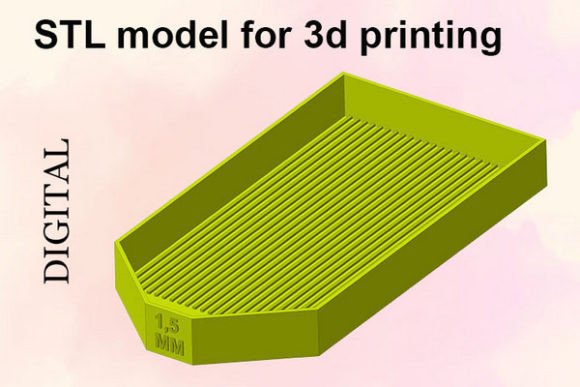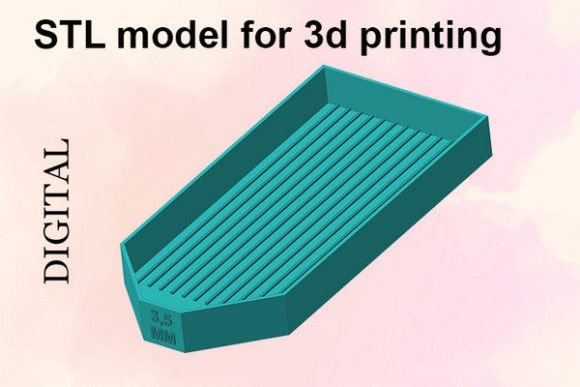
Rhinestone Sorting Tray 3.5mm STL File: A Practical Tool for Precision Crafting
For professionals and hobbyists working with small embellishments, organization is not merely a preference but a functional requirement of the workflow. The Rhinestone Sorting Tray 3.5mm STL file addresses a specific bottleneck in bedazzling, nail art, and jewelry design: the efficient orientation and selection of uniform stones. This digital asset provides a blueprint for a specialized tool designed to sort rhinestones with a 3.5mm diameter, transforming a chaotic pile of gems into an orderly array ready for application. Unlike generic storage containers, this tray utilizes geometric precision to assist in the physical manipulation of materials, reducing friction during the creative process.
Functional Design and Mechanical Utility
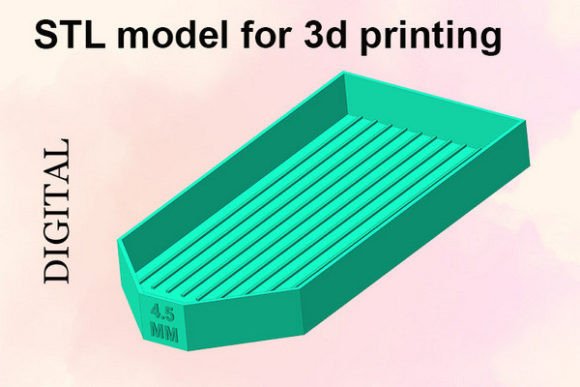
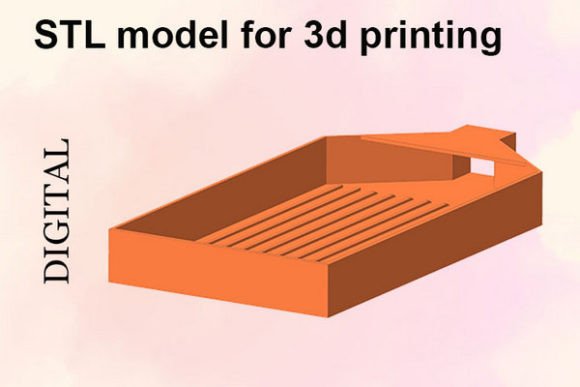
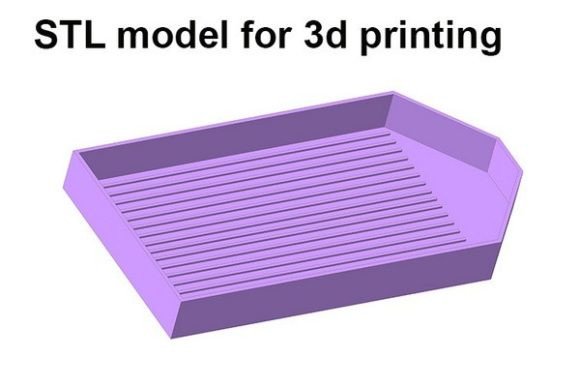
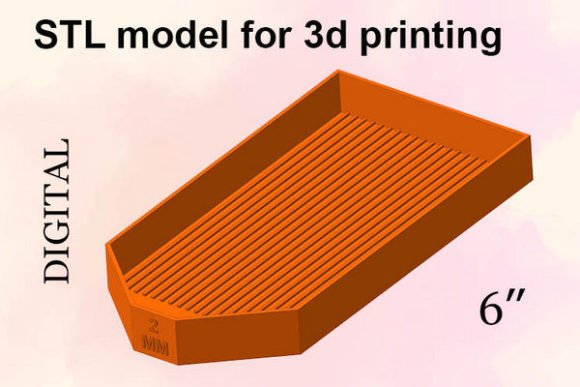
The primary value proposition of this Rhinestone Sorting Tray 3.5mm STL file lies in its mechanical utility rather than simple storage. In professional crafting environments, time spent searching for or reorienting individual stones represents lost productivity. This tray is engineered with recessed cavities specifically sized for 3.5mm diameter rhinestones. When stones are placed in the tray and subjected to gentle lateral agitation, the geometry encourages them to settle face-up within the designated slots. This self-aligning mechanism is critical for users employing wax pencils, tweezers, or silicone pick-up tools, as it presents the adhesive-ready surface of the stone consistently.
This functionality distinguishes the sorting tray from standard bead organizers. While typical compartment boxes store inventory, they do not facilitate active work. The sorting tray acts as a staging area that bridges the gap between bulk storage and precise placement. For nail technicians and freelance artists who bill by the hour or project, the reduction in fumbling time directly correlates to improved margins and client satisfaction. The ability to quickly identify and retrieve correctly oriented stones minimizes eye strain and maintains the rhythmic flow necessary for high-quality detailing.
Digital Acquisition and Manufacturing Flexibility
As a digital product, the Rhinestone Sorting Tray 3.5mm STL file offers immediate accessibility and manufacturing autonomy. Upon purchase, users receive an instant download containing one STL file, eliminating shipping delays and allowing for on-demand production. This model suits entrepreneurs and educators who may need multiple units for a workshop or studio without incurring significant per-unit costs. The digital format also enables localized production; users can print the tray on personal FDM or resin printers or utilize third-party printing services if they lack in-house equipment.
The flexibility of owning the STL file extends to material selection. Users can choose filaments based on specific performance criteria rather than being limited to a manufacturer’s stock options. For instance, a matte PLA or PETG is often preferable to glossy materials, as reduced reflectivity improves contrast and visibility when sorting metallic or transparent stones. TPU (flexible filament) may be selected for users who require a non-slip base or quieter operation during the shaking process. This customization ensures the tool adapts to the specific environmental and ergonomic needs of the workspace.
Applications Across Professional and Creative Domains
While the product description highlights nail art and general bedazzling, the utility of the Rhinestone Sorting Tray 3.5mm STL file spans several distinct user groups. Understanding these applications helps potential buyers evaluate fit for their specific workflows.
- Nail Technicians: This is perhaps the most demanding use case. Nail art requires extreme precision, and 3.5mm stones are common accent pieces. The tray allows technicians to maintain a sterile, organized field, preventing cross-contamination and ensuring stones are picked up efficiently during time-sensitive gel curing cycles.
- Cosplay and Costume Fabricators: Professionals creating stage wear or competition costumes often work with thousands of identical stones. The tray facilitates batch processing, allowing creators to prep large quantities of aligned stones before applying them to fabric, significantly accelerating coverage rates.
- Jewelry Makers and Beaders: For artisans incorporating rhinestones into metalwork or bead weaving, the tray serves as a reliable palette. It prevents stones from rolling off work surfaces and keeps different sizes segregated during complex assembly tasks.
- Educators and Workshop Leaders: Instructors teaching embellishment techniques can provide students with standardized tools. Printing trays from the STL file ensures every participant has identical equipment, reducing variables and allowing the instructor to focus on technique rather than troubleshooting makeshift sorting methods.
Evaluating Print Quality and Usability Factors
The effectiveness of the Rhinestone Sorting Tray 3.5mm STL file is contingent upon successful fabrication. Because the design relies on tight tolerances to hold 3.5mm stones securely without jamming, print settings matter significantly. Users should anticipate a need for calibration. If the printer’s dimensional accuracy is off by even 0.1mm, stones may either fail to seat properly or become stuck in the cavities. It is advisable to print a test coupon or single row first to verify tolerance before committing to the full tray.
Layer height and infill density also influence usability. A lower layer height (0.12mm to 0.16mm) typically yields smoother cavity walls, which reduces friction during the shaking/orientation phase. High infill is generally unnecessary for this application; 15-20% is sufficient to provide rigidity while conserving material. However, top layers must be solid and well-fused to prevent rough textures that could snag delicate stone foils. Post-processing, such as light sanding or vapor smoothing for ABS/ASA prints, can further enhance performance, though many users find standard PLA prints adequate for immediate use.
Users should also consider the tray's footprint relative to their workspace. Digital files allow for scaling, but altering the size will render the 3.5mm specification obsolete. If a different stone size is required, users must source a different STL or modify the CAD file directly. This limitation underscores the importance of verifying stone dimensions against the file specifications before printing. The 3.5mm size is versatile, but it is not universal.
Long-Term Value and Workflow Integration
From a cost-benefit perspective, the Rhinestone Sorting Tray 3.5mm STL file represents a high-value, low-risk investment for serious practitioners. The one-time cost of the digital file amortizes over unlimited prints, making the marginal cost of each additional tray negligible. This economic structure supports scalability; a growing business can expand its toolset without proportional increases in overhead. Furthermore, because the file is digital, replacement is instantaneous. Physical trays break, warp, or get lost; an STL file remains a permanent asset in the user’s library.
Integration into existing workflows is generally seamless due to the tool’s passive nature. It does not require power, software, or maintenance. It simply occupies space on the workbench and performs its function through physics. However, users should manage expectations regarding capacity. A sorting tray is an active work surface, not a long-term storage solution. It holds only enough stones for current tasks. Effective workflow management still requires separate bulk storage systems, with the sorting tray serving as the interface between inventory and application.
Practical Recommendations for Prospective Users
Potential users should assess their current pain points before acquiring this Rhinestone Sorting Tray 3.5mm STL file. If your primary challenge is losing stones or struggling with orientation during detailed work, this tool offers a targeted solution. If your challenge is bulk storage or transport, other organizational systems may be more appropriate. The tray excels at the point of application, not in the supply chain.
For those new to 3D printing, this project serves as an excellent benchmark for printer calibration. The functional tolerances provide immediate feedback on machine performance. Successfully printing a usable sorting tray indicates a well-tuned system capable of producing other precision crafting aids. Conversely, failure highlights areas for improvement in bed leveling, flow rate, or dimensional compensation.
Ultimately, the Rhinestone Sorting Tray 3.5mm STL file is a utilitarian asset that prioritizes function over form. It solves a tangible problem for a specific niche, delivering measurable improvements in efficiency and ergonomics. For professionals and dedicated hobbyists whose work depends on the precise manipulation of small components, this digital tool offers a practical return on investment through enhanced workflow consistency and reduced operational friction. Whether printed in-house or sourced via a service, it transforms a repetitive manual task into a streamlined, predictable process.